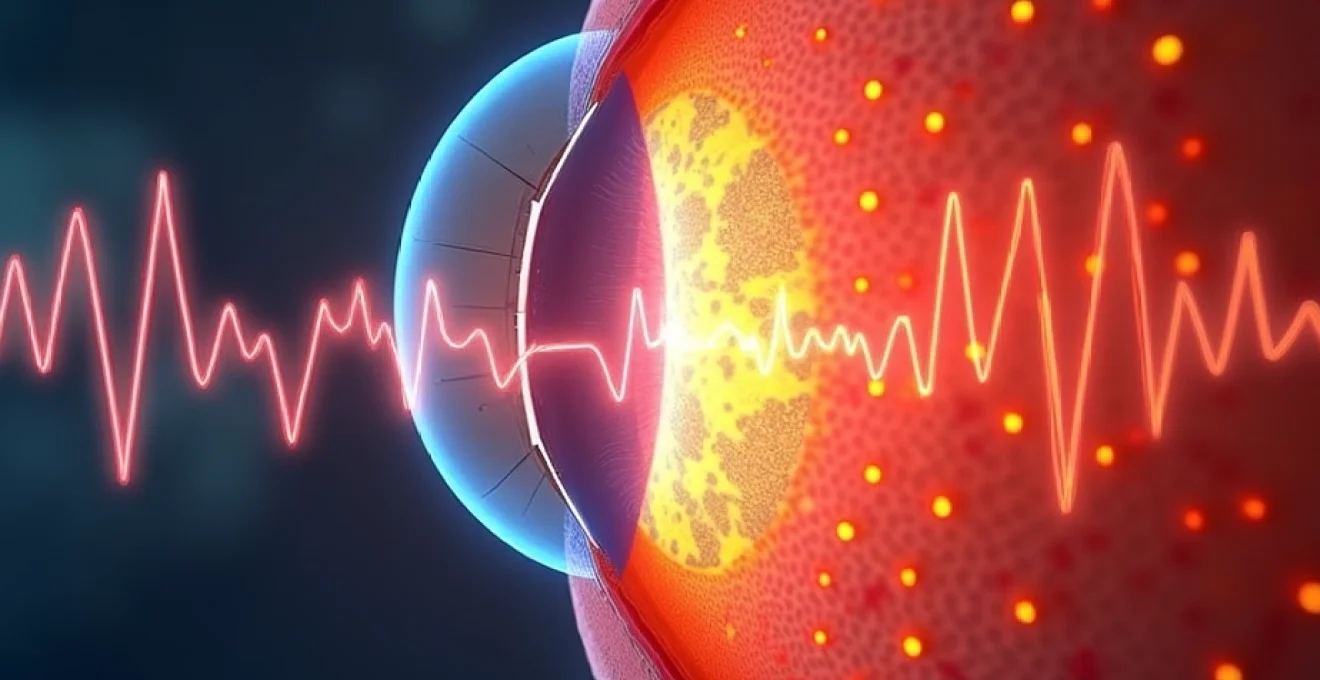
The intricate relationship between cardiovascular function and visual perception represents one of medicine’s most fascinating connections. When your vision appears to pulse rhythmically with your heartbeat, it signals a complex interplay between cardiac output, vascular dynamics, and ocular physiology. This phenomenon, while often subtle, can provide valuable insights into both cardiovascular health and underlying pathological conditions affecting the visual system. Understanding these cardiac-visual synchronisations requires exploring the sophisticated mechanisms that govern blood flow to the delicate structures within your eyes.
Cardiac-visual synchronisation: understanding pulsatile vision phenomena
The synchronisation between cardiac cycles and visual perception occurs through multiple physiological pathways that interconnect cardiovascular function with ocular blood supply. Every heartbeat generates pressure waves that travel throughout the vascular system, including the delicate network of vessels supplying the retina, choroid, and optic nerve. These pressure fluctuations create measurable changes in ocular perfusion that can manifest as perceptible visual alterations in certain individuals or pathological conditions.
Pulsatile vision phenomena represent a unique diagnostic window into the cardiovascular system’s impact on ocular function. The eye’s transparent structures and direct visualisation capabilities make it an ideal organ for observing real-time vascular dynamics. When cardiac output varies significantly, or when vascular compliance is altered, these changes become more pronounced and potentially symptomatic.
Systolic blood pressure fluctuations and retinal perfusion
During systole, the heart’s forceful contraction generates peak arterial pressure that directly influences retinal arterial perfusion. This systolic surge creates temporary increases in retinal blood flow that can affect visual acuity and perception. The retinal vasculature, being end-arterial in nature, is particularly sensitive to these pressure variations. Studies indicate that systolic pressure fluctuations can alter retinal perfusion by up to 15-20% during each cardiac cycle.
The pulse pressure amplitude —the difference between systolic and diastolic pressures—plays a crucial role in determining the magnitude of these visual fluctuations. Individuals with wider pulse pressures, often associated with arterial stiffening or aortic regurgitation, may experience more pronounced cardiac-synchronised visual disturbances.
Intraocular pressure variations during cardiac cycles
Intraocular pressure (IOP) demonstrates measurable fluctuations that correlate with cardiac rhythm, typically varying by 1-3 mmHg during each heartbeat. These variations result from the pulsatile nature of choroidal blood flow and the eye’s relatively rigid scleral shell. During systole, increased choroidal blood volume temporarily elevates IOP, while diastolic relaxation allows pressure normalisation.
The relationship between cardiac cycles and IOP becomes particularly significant in patients with compromised ocular drainage systems or elevated baseline pressures. In glaucomatous eyes, these cardiac-synchronised pressure fluctuations may contribute to progressive optic nerve damage through repetitive mechanical stress on retinal ganglion cells.
Choroidal blood flow modulation and visual perception
The choroidal circulation supplies approximately 85% of the eye’s blood flow, making it highly responsive to cardiac-driven pressure changes. This vascular bed’s unique architecture, characterised by large-calibre vessels and minimal autoregulation, allows direct transmission of systemic pressure waves. Choroidal blood flow variations can influence photoreceptor function by altering oxygen and nutrient delivery to the outer retinal layers.
Research demonstrates that choroidal thickness fluctuates by 2-8 micrometers during cardiac cycles, with these changes potentially affecting visual sensitivity. The choroidal pulse amplitude serves as a valuable indicator of ocular perfusion status and can reveal underlying cardiovascular or ocular pathology when measurements deviate significantly from normal ranges.
Arterial pulsation impact on fundus photography
Modern fundus photography techniques can capture the dynamic nature of retinal arterial pulsations, providing objective documentation of cardiac-synchronised vascular changes. High-resolution imaging reveals rhythmic variations in vessel calibre that correspond directly to cardiac cycles. These measurements offer quantitative assessment of retinal vascular health and can detect early signs of systemic cardiovascular disease.
The amplitude of retinal arterial pulsations correlates with systemic pulse pressure and arterial compliance. Enhanced pulsation amplitudes may indicate increased cardiovascular risk, while diminished pulsations can suggest compromised retinal perfusion or downstream vascular obstruction.
Neurophysiological mechanisms behind Heartbeat-Synchronised visual disturbances
The neurophysiological basis for heartbeat-synchronised visual phenomena involves complex interactions between vascular perfusion, neural transmission, and visual processing pathways. Understanding these mechanisms requires examining how cardiac-driven pressure waves influence neural function at multiple levels, from photoreceptor activation to higher-order visual cortex processing. The eye’s unique position as an extension of the central nervous system makes it particularly susceptible to perfusion-related neural fluctuations.
Optic nerve head perfusion and cardiac rhythm correlation
The optic nerve head receives blood supply from both retinal and choroidal circulations, creating a complex perfusion pattern that varies with cardiac cycles. During systole, increased perfusion pressure enhances oxygen delivery to retinal ganglion cell axons, while diastolic periods may create relative hypoperfusion zones. This rhythmic perfusion variation can influence action potential generation and transmission along the optic nerve.
Patients with compromised optic nerve head perfusion, such as those with glaucoma or optic neuropathies, may experience more pronounced cardiac-synchronised visual symptoms. The optic nerve head pulse becomes a critical diagnostic indicator, with abnormal pulsation patterns suggesting underlying perfusion abnormalities or elevated intracranial pressure.
Retinal ganglion cell response to vascular pulsations
Retinal ganglion cells demonstrate measurable electrical activity changes in response to cardiac-driven perfusion fluctuations. These cells’ high metabolic demands make them particularly sensitive to oxygen and glucose delivery variations. Electroretinography studies reveal that retinal responses can show subtle amplitude modulations corresponding to cardiac rhythm, particularly in the photopic negative response component.
The cellular mechanisms underlying these responses involve mitochondrial function variations and membrane potential fluctuations secondary to perfusion changes. Research indicates that sustained exposure to significant perfusion fluctuations may contribute to ganglion cell dysfunction and progressive visual field defects.
Visual cortex processing of rhythmic photoreceptor signals
The visual cortex receives and processes rhythmic signals that originate from cardiac-synchronised retinal activity. These subtle but measurable neural oscillations can influence visual perception, particularly in conditions where the signal amplitude increases significantly. Functional magnetic resonance imaging studies demonstrate that visual cortex activity shows detectable correlations with cardiac cycles in certain pathological states.
The brain’s remarkable ability to adapt and filter these rhythmic signals explains why most individuals remain unaware of their cardiac-visual synchronisation. However, when adaptation mechanisms become overwhelmed or compromised, these signals may manifest as perceptible visual disturbances such as pulsating vision or rhythmic brightness variations.
Autonomic nervous system regulation of ocular blood supply
The autonomic nervous system plays a crucial role in modulating ocular blood flow and its relationship to cardiac rhythm. Sympathetic and parasympathetic innervation of ocular vessels creates complex regulatory mechanisms that can either amplify or dampen cardiac-synchronised perfusion changes. Stress, medications, and pathological conditions affecting autonomic function can significantly alter these regulatory responses.
Autonomic dysfunction may manifest as exaggerated cardiac-visual synchronisation, with patients reporting more pronounced pulsatile visual symptoms during periods of physiological stress or medication adjustments. Understanding these autonomic influences becomes essential for proper diagnosis and management of cardiac-related visual disturbances.
Clinical manifestations of pulsatile visual symptoms
Patients experiencing cardiac-synchronised visual disturbances typically describe a range of symptoms that vary in intensity and frequency. The most common presentation involves rhythmic visual brightness fluctuations that correspond directly to the heartbeat, often becoming more noticeable during periods of elevated cardiac output or in quiet, dimly lit environments. These symptoms may initially appear intermittent but can progress to constant awareness in pathological conditions.
Visual field changes represent another significant manifestation, with patients reporting rhythmic expansion and contraction of their peripheral vision. This phenomenon occurs when cardiac-driven perfusion changes affect different retinal regions variably, creating temporal variations in visual sensitivity. Some individuals develop acute awareness of their own retinal arterial pulsations, describing them as “dancing vessels” or rhythmic movements in their visual field.
Colour perception alterations may accompany pulsatile visual symptoms, particularly involving blue-yellow discrimination. The differential sensitivity of various photoreceptor types to perfusion changes creates colour-specific symptoms that can aid in diagnosis. Patients might report rhythmic colour shifts or desaturation that synchronises with their pulse, especially during physical exertion or emotional stress.
The key to recognising pathological pulsatile vision lies in distinguishing between normal physiological variations and symptomatic presentations that warrant further investigation.
Ophthalmoscopic evidence of Cardiac-Synchronised retinal changes
Direct ophthalmoscopic examination reveals fascinating real-time evidence of cardiac-synchronised retinal vascular changes. Experienced clinicians can observe rhythmic arterial calibre variations, venous pulsations, and optic disc movement that correspond precisely to the patient’s pulse. These findings provide objective confirmation of suspected cardiac-visual connections and offer insights into underlying pathophysiology.
Retinal arterial pulsations become visible when intraocular pressure approaches diastolic perfusion pressure, creating intermittent vessel collapse and refilling. This phenomenon, known as spontaneous arterial pulsation , typically indicates elevated intraocular pressure or reduced perfusion pressure. Conversely, venous pulsations at the optic disc margin are normally present and their absence may suggest elevated intracranial pressure.
Advanced imaging techniques, including optical coherence tomography angiography and fundus fluorescein angiography, can capture detailed measurements of cardiac-synchronised vascular dynamics. These technologies reveal perfusion patterns, transit times, and vascular density variations that correlate with cardiac function. Such detailed analysis enables quantification of previously subjective observations and enhances diagnostic accuracy.
The optic disc’s rhythmic movement, termed optic disc pulsation , becomes apparent in conditions with elevated intracranial pressure or reduced intracranial compliance. This movement reflects transmitted intracranial pressure fluctuations and cerebrospinal fluid pulse waves that synchronise with cardiac cycles. Measuring the amplitude and characteristics of these movements provides valuable information about intracranial dynamics.
Pathological conditions amplifying Heartbeat-Vision synchronisation
Several pathological conditions can significantly amplify the normal cardiac-visual synchronisation, making previously imperceptible phenomena clinically apparent. These conditions alter the normal balance between cardiac output, vascular resistance, and ocular perfusion, resulting in exaggerated or symptomatic pulsatile vision. Understanding these amplifying factors enables targeted diagnostic evaluation and appropriate therapeutic interventions.
Papilloedema and increased intracranial pressure effects
Papilloedema, characterised by optic disc swelling due to elevated intracranial pressure, dramatically amplifies cardiac-synchronised visual phenomena. The increased pressure creates a rigid system where small cardiac-driven pressure fluctuations produce disproportionately large effects on retinal perfusion and optic nerve function. Patients with papilloedema often report pronounced pulsatile visual symptoms that worsen with positional changes or Valsalva manoeuvres.
The mechanism involves impaired venous drainage from the eye, creating a damming effect that amplifies arterial pressure waves. This results in exaggerated optic disc pulsations, enhanced retinal vascular pulsations, and sometimes visible choroidal folds. The papilloedema-related pulsatile vision serves as an important clinical indicator of intracranial pressure elevation requiring urgent evaluation.
Carotid artery stenosis impact on ocular circulation
Carotid artery stenosis creates altered perfusion patterns that can manifest as asymmetric or enhanced cardiac-visual synchronisation. The stenotic lesion acts as a mechanical filter, modifying the normal pressure wave transmission to ocular vessels. Patients may experience unilateral pulsatile visual symptoms corresponding to the affected carotid territory, often accompanied by other neurological symptoms.
Ophthalmoscopic examination in carotid stenosis patients may reveal asymmetric retinal arterial calibres, delayed arterial filling during fluorescein angiography, or enhanced arterial pulsations on the affected side. These findings can provide early warning signs of significant carotid disease before the development of stroke symptoms.
Hypertensive retinopathy and arteriovenous nicking
Chronic hypertension produces characteristic retinal changes that modify cardiac-visual synchronisation patterns. Arteriovenous nicking, arterial narrowing, and cotton-wool spots create altered vascular dynamics that can enhance or modify normal pulsatile phenomena. The stiffened arterial walls in hypertensive retinopathy may actually reduce normal pulsation amplitudes while creating new areas of turbulent flow.
Advanced hypertensive changes, including hard exudates and microaneurysms, can create focal areas of altered perfusion that manifest as localised pulsatile visual symptoms. These changes often correlate with systemic cardiovascular risk and may predict future cardiac events. Regular ophthalmoscopic examination provides valuable monitoring of hypertensive cardiovascular effects.
Thyroid eye disease and orbital congestion patterns
Thyroid eye disease creates orbital congestion that significantly modifies normal cardiac-visual relationships. The enlarged extraocular muscles and increased orbital fat compress orbital vessels, creating a compartment syndrome-like effect that amplifies cardiac pressure transmission. Patients often report pronounced pulsatile visual symptoms, particularly with eye movements or changes in gaze direction.
The orbital congestion in thyroid eye disease can create a unique pattern where venous drainage becomes impaired while arterial inflow remains relatively preserved. This creates enhanced arterial pulsations and may produce visible proptosis variations that synchronise with cardiac cycles. Understanding these patterns aids in disease monitoring and treatment planning.
Diagnostic techniques for measuring ocular pulsations
Modern diagnostic techniques provide sophisticated methods for quantifying and analysing cardiac-synchronised ocular phenomena. These technologies enable objective measurement of previously subjective observations, facilitating more accurate diagnosis and monitoring of related conditions. The integration of advanced imaging with physiological monitoring creates comprehensive assessment protocols for evaluating cardiac-visual relationships.
Ocular pulse amplitude measurement represents one of the most direct approaches for quantifying cardiac-synchronised intraocular pressure changes. This technique uses pneumatonometry or dynamic contour tonometry to measure pressure fluctuations during cardiac cycles. Normal ocular pulse amplitudes range from 1-4 mmHg, with elevated values suggesting increased ocular blood flow or reduced scleral rigidity. Reduced amplitudes may indicate compromised perfusion or increased downstream resistance.
High-speed optical coherence tomography provides real-time imaging of retinal and choroidal thickness variations during cardiac cycles. This technology reveals subtle structural changes that correspond to perfusion fluctuations, enabling detailed analysis of tissue-level responses to cardiac output. The technique can detect choroidal thickness variations as small as 2-3 micrometers, providing unprecedented insight into cardiac-visual relationships.
Advanced diagnostic techniques transform subjective pulsatile visual symptoms into objective, quantifiable measurements that enhance clinical decision-making and treatment monitoring.
Retinal vessel calibre analysis uses computer-assisted measurement of fundus photographs to quantify arterial and venous diameter changes during cardiac cycles. These measurements correlate with systemic cardiovascular parameters and can predict future cardiovascular events. The technique enables longitudinal monitoring of vascular health and treatment responses in patients with cardiac-related visual symptoms.
Doppler ultrasound of orbital vessels provides direct measurement of blood flow velocities and resistance patterns in the ophthalmic artery and its branches. This technique reveals cardiac-synchronised flow variations and can detect stenotic lesions or abnormal flow patterns that contribute to pulsatile visual symptoms. The integration of colour Doppler imaging with spectral analysis provides comprehensive assessment of orbital vascular dynamics.
Electroretinography with cardiac synchronisation analysis represents an emerging diagnostic approach that correlates retinal electrical responses with cardiac cycles. This technique can detect subtle neural function variations that
correspond to cardiovascular pulsations, potentially offering new insights into retinal-cardiac relationships and early disease detection.
Fundus pulsation photography utilises high-speed imaging to capture real-time vascular movements and tissue displacement during cardiac cycles. This technique provides visual documentation of normally imperceptible phenomena and enables frame-by-frame analysis of cardiac-synchronised changes. The resulting images serve as valuable diagnostic tools and can track treatment responses in patients with pulsatile visual symptoms.
Ambulatory monitoring systems combine continuous intraocular pressure measurement with cardiac rhythm monitoring to assess long-term cardiac-visual relationships. These devices reveal daily patterns of ocular pulsation amplitude and can identify triggers or exacerbating factors for pulsatile visual symptoms. The technology enables personalised treatment approaches based on individual pulsation patterns and cardiovascular correlations.
Advanced computational analysis applies machine learning algorithms to identify subtle patterns in cardiac-synchronised visual data that may escape human detection. These systems can predict cardiovascular events based on changes in ocular pulsation characteristics and may offer new screening opportunities for early disease identification. The integration of artificial intelligence with traditional diagnostic techniques represents the future of cardiac-visual assessment.
When seeking evaluation for pulsatile visual symptoms, patients should undergo comprehensive ophthalmological examination combined with cardiovascular assessment. The diagnostic workup typically includes detailed medical history focusing on cardiac symptoms, medication use, and family history of cardiovascular disease. Physical examination should assess blood pressure, pulse characteristics, and signs of systemic vascular disease alongside thorough ocular evaluation.
The correlation between subjective symptoms and objective measurements guides treatment decisions and monitoring protocols. Patients with confirmed cardiac-visual synchronisation abnormalities require regular follow-up to assess disease progression and treatment effectiveness. Early intervention in underlying cardiovascular conditions often leads to improvement in pulsatile visual symptoms and may prevent more serious complications.
Understanding why vision may pulse with your heartbeat reveals the intricate connections between cardiovascular health and visual function. These phenomena serve as important diagnostic indicators that can provide early warning signs of systemic disease and guide appropriate medical intervention. Regular eye examinations combined with cardiovascular screening offer comprehensive approaches to maintaining both visual and cardiac health throughout life.