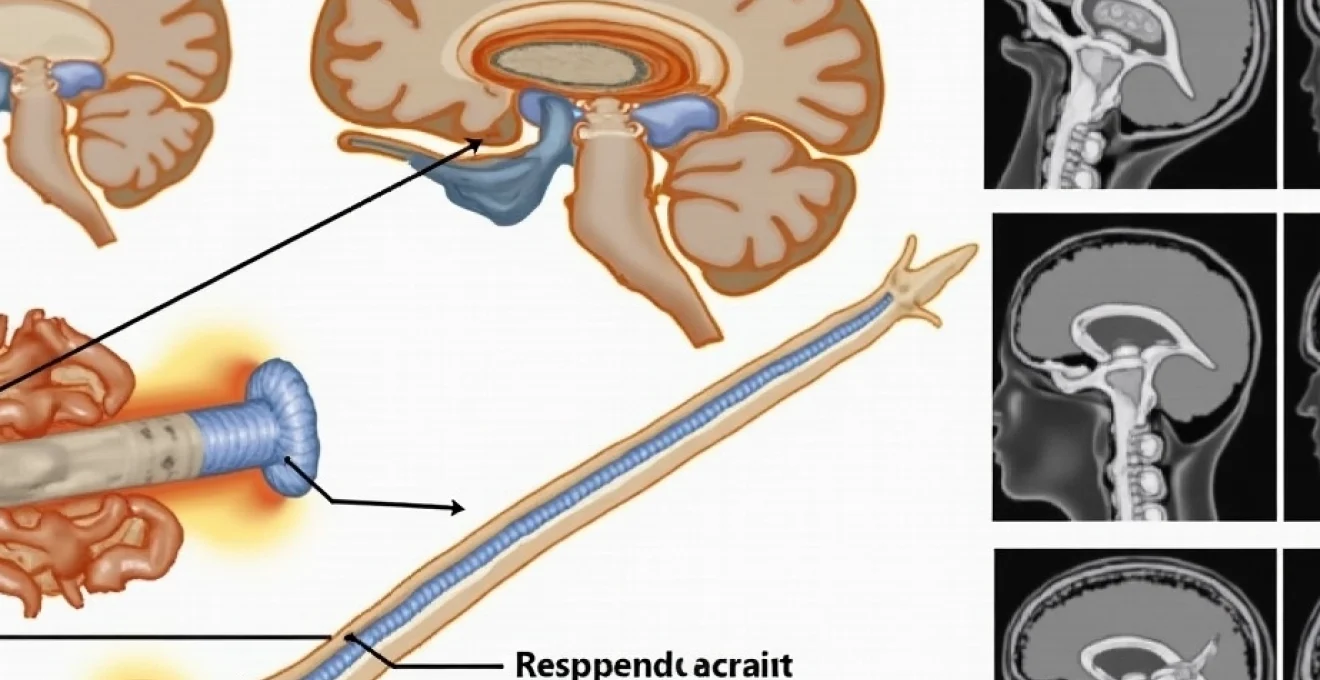
Ventral cord flattening represents a critical radiological finding that signals potential cervical myelopathy, a condition where the spinal cord experiences compression from anterior structures. This anatomical deformation occurs when degenerative changes in the cervical spine create pressure on the ventral aspect of the spinal cord, leading to a characteristic flattening pattern visible on magnetic resonance imaging. Understanding this phenomenon is essential for clinicians, as it often serves as an early indicator of progressive neurological deterioration that may require prompt intervention.
The significance of recognising ventral cord flattening extends beyond mere radiological observation. This finding frequently precedes the development of clinical symptoms, making it a valuable prognostic indicator for patients with cervical spine pathology. Early identification allows for timely therapeutic intervention, potentially preventing irreversible neurological damage and preserving functional capacity.
Anatomical definition and pathophysiology of ventral cord flattening
Normal cervical spinal cord morphology and Cross-Sectional geometry
The healthy cervical spinal cord maintains a characteristic oval cross-sectional appearance with distinct anatomical landmarks that facilitate neurological function. Under normal circumstances, the cord exhibits a symmetrical configuration with clearly defined anterior and posterior horns of grey matter surrounded by organised white matter tracts. The anteroposterior diameter typically measures between 8-10 millimetres at the C5-C6 level, while the transverse diameter ranges from 12-14 millimetres, creating a normal ratio that serves as a baseline for pathological assessment.
The spinal cord’s morphology reflects its functional organisation, with motor neurons concentrated in the anterior grey matter and sensory pathways predominantly located in the posterior columns. This anatomical arrangement becomes critically important when understanding how compression affects neurological function. The delicate vascular supply, particularly the anterior spinal artery system, maintains metabolic demands across these neural structures, making the cord particularly vulnerable to compression-related ischaemia.
Mechanical compression forces leading to anteroposterior diameter reduction
Ventral cord flattening occurs when external mechanical forces compress the spinal cord from anterior structures, fundamentally altering its normal geometric configuration. The primary mechanism involves progressive compression from degenerative disc material, osteophyte formation, or ligamentous hypertrophy that gradually reduces the available space within the spinal canal. This compression creates a characteristic deformation pattern where the cord’s anteroposterior dimension decreases while the transverse dimension may remain relatively preserved or even increase slightly due to lateral displacement of neural tissue.
The biomechanical process resembles squeezing a cylindrical object between two surfaces – the cord adapts by flattening in the direction of applied force. This deformation is not merely cosmetic; it represents a fundamental alteration in the spatial relationships between neural structures and can significantly impact the function of compressed tissue. The degree of flattening correlates with the severity of compression, with ratios below 0.4 (anteroposterior to transverse diameter) indicating severe cord compression requiring urgent evaluation.
Distinction between ventral cord flattening and posterior cord compression
Understanding the anatomical differences between ventral and posterior cord compression is crucial for accurate diagnosis and treatment planning. Ventral cord flattening specifically refers to compression from anterior pathological processes, most commonly involving disc herniation, osteophyte complexes, or ossification of the posterior longitudinal ligament. This pattern creates a characteristic anterior indentation of the cord with preservation of the posterior subarachnoid space, distinguishing it from posterior compression syndromes.
Posterior compression, conversely, typically results from ligamentum flavum hypertrophy, facet joint arthropathy, or congenital stenosis affecting the posterior elements of the spine. The imaging characteristics differ significantly, with posterior compression showing preserved anterior CSF space and flattening of the posterior cord surface. These distinctions are not merely academic – they directly influence surgical approach selection and predict post-operative outcomes based on the affected neural pathways.
Relationship to central canal stenosis and grey matter deformation
The relationship between ventral cord flattening and central canal stenosis represents a complex interplay of mechanical and vascular factors. As external compression progresses, the central canal – the cerebrospinal fluid-filled space running through the cord’s centre – becomes compromised, potentially disrupting normal CSF circulation and creating additional pressure within the cord itself. This internal pressure can exacerbate neurological dysfunction beyond what external compression alone might produce.
Grey matter deformation accompanying ventral cord flattening particularly affects the anterior horn cells responsible for motor function. The mechanical distortion of these neural structures can lead to progressive weakness and spasticity patterns characteristic of cervical myelopathy. Research demonstrates that even mild flattening can alter the microenvironment of motor neurons, potentially triggering apoptotic pathways and contributing to the progressive nature of untreated cervical spondylotic myelopathy.
MRI imaging characteristics and diagnostic criteria for ventral cord flattening
T2-weighted sagittal imaging protocol and signal intensity changes
T2-weighted sagittal magnetic resonance imaging serves as the cornerstone for diagnosing ventral cord flattening, providing excellent contrast between the spinal cord, cerebrospinal fluid, and surrounding structures. The protocol typically employs a slice thickness of 3-4 millimetres with minimal gap to ensure comprehensive coverage of the cervical spine. On these sequences, ventral cord flattening appears as a loss of the normal cord contour with anterior indentation at the level of compression, often accompanied by signal intensity changes within the cord parenchyma.
The presence of T2 hyperintensity within the compressed cord segment indicates more advanced pathological changes, potentially representing oedema, gliosis, or myelomalacia. These signal changes carry significant prognostic implications, with studies demonstrating poorer surgical outcomes in patients exhibiting extensive T2 hyperintensity compared to those with preserved signal characteristics. The distribution and extent of signal abnormality help stratify patients for treatment urgency and predict recovery potential following decompressive intervention.
Axial gradient echo sequences for Cross-Sectional assessment
Axial gradient echo sequences provide superior visualisation of the spinal cord’s cross-sectional anatomy, allowing precise measurement of cord dimensions and assessment of flattening severity. These sequences excel at demonstrating the interface between cord tissue and cerebrospinal fluid, facilitating accurate measurement of anteroposterior and transverse diameters. The typical protocol employs slice thickness of 2-3 millimetres with high in-plane resolution to capture subtle morphological changes.
The cross-sectional appearance of ventral cord flattening on axial images reveals characteristic features including anterior cord indentation, preservation of posterior subarachnoid space, and potential lateral cord displacement. Gradient echo sequences also enhance the visualisation of calcified structures and haemosiderin deposits, which may contribute to cord compression. The ability to assess cord morphology at multiple levels simultaneously allows for comprehensive evaluation of the extent of pathological involvement and guides surgical planning decisions.
Quantitative measurements using anteroposterior to transverse ratios
Quantitative assessment of ventral cord flattening relies primarily on the anteroposterior to transverse diameter ratio, a reliable metric for documenting compression severity and monitoring progression over time. Normal ratios typically range from 0.65 to 0.80, with values below 0.60 indicating moderate compression and ratios under 0.40 suggesting severe cord flattening requiring urgent evaluation. These measurements provide objective criteria for treatment decisions and enable standardised communication between healthcare providers.
The measurement technique involves identifying the maximum anteroposterior and transverse diameters at the level of maximum compression, typically performed on axial T2-weighted images where the cord boundaries are most clearly defined. Standardised measurement protocols ensure reproducibility and allow for meaningful comparison across different imaging studies. Serial measurements over time can document progression or improvement following treatment, making this ratio an invaluable tool for long-term patient management.
Differentiation from cord oedema and myelomalacia on STIR sequences
Short Tau Inversion Recovery (STIR) sequences provide exceptional sensitivity for detecting pathological changes within the spinal cord, particularly useful for distinguishing between reversible oedema and irreversible myelomalacia in patients with ventral cord flattening. These sequences suppress fat signal while enhancing fluid-containing structures, making subtle cord signal abnormalities more conspicuous than conventional T2-weighted imaging.
The differentiation between cord oedema and myelomalacia carries significant clinical implications for treatment planning and prognosis. Oedematous changes typically appear as ill-defined, relatively homogeneous hyperintensity that may resolve following successful decompression, while myelomalacia presents as more sharply defined areas of signal abnormality representing irreversible tissue damage. STIR sequences excel at detecting early oedematous changes that might be subtle on conventional imaging, potentially identifying patients who would benefit from earlier intervention.
Dynamic Flexion-Extension MRI studies in cervical spondylosis
Dynamic MRI studies performed in flexion and extension positions reveal the functional impact of cervical spondylosis on cord compression, providing insights that static imaging cannot capture. These studies demonstrate how positional changes affect the degree of ventral cord flattening and help identify patients with dynamic instability contributing to their symptoms. The technique involves obtaining sagittal T2-weighted sequences in neutral, flexion, and extension positions to assess positional variations in canal dimensions and cord morphology.
The clinical value of dynamic MRI lies in its ability to unmask compression that may not be apparent on static studies, particularly in patients with preserved disc height or minimal static stenosis. Some patients exhibit significant worsening of cord flattening with extension, correlating with symptom patterns and helping explain why certain activities exacerbate their neurological symptoms. This information proves invaluable for surgical planning, particularly when considering the extent of decompression required and the need for fusion procedures to address instability.
Clinical manifestations and neurological correlations in cervical myelopathy
Upper motor neurone signs and hyperreflexia patterns
The clinical presentation of ventral cord flattening typically manifests as cervical spondylotic myelopathy with characteristic upper motor neurone signs reflecting damage to descending motor pathways. Patients commonly develop progressive spasticity, particularly affecting the lower extremities, with increased muscle tone and velocity-dependent resistance to passive movement. The pattern of weakness often follows a predictable distribution, with proximal muscles affected before distal groups, and lower extremities more severely impacted than upper extremities due to the anatomical organisation of descending motor tracts.
Hyperreflexia represents one of the earliest and most reliable signs of cervical myelopathy associated with cord flattening. Deep tendon reflexes become exaggerated, with the knee and ankle jerks often demonstrating sustained clonus in advanced cases. The pathological reflex patterns extend beyond simple hyperreflexia to include inverted reflexes, where stimulation of one reflex produces an unexpected response in a different muscle group, indicating involvement of multiple spinal levels and reflex arc disruption.
Sensory deficit distribution in posterior column dysfunction
Sensory disturbances in patients with ventral cord flattening typically follow patterns consistent with posterior column involvement, though the primary compression affects the anterior cord. This apparent paradox occurs because compression-induced oedema and vascular compromise can affect the entire cross-sectional area of the cord, not just the directly compressed anterior regions. Patients frequently report diminished vibration sense and proprioception, particularly in the hands and feet, leading to functional impairments in fine motor control and balance.
The distribution of sensory loss often follows a characteristic glove-and-stocking pattern, though cervical myelopathy can produce more complex sensory phenomena including dissociated sensory loss where different sensory modalities are affected to varying degrees. Temperature and pain sensation may be relatively preserved compared to touch and position sense, reflecting the differential vulnerability of various sensory pathways to compression and ischaemia. These sensory patterns help differentiate cervical myelopathy from peripheral neuropathy and guide diagnostic evaluation.
Hoffman’s sign and inverted radial reflex clinical testing
Hoffman’s sign represents a pathognomonic finding in cervical myelopathy, elicited by flicking the nail or distal phalanx of the middle finger and observing for involuntary flexion of the thumb and index finger. This reflex indicates hyperexcitability of the C8-T1 myotomes and suggests upper motor neurone dysfunction at the cervical level. The presence of Hoffman’s sign correlates strongly with radiological evidence of cord compression and often precedes the development of obvious weakness or spasticity.
The inverted radial reflex provides another valuable clinical sign, where percussion of the brachioradialis tendon produces finger flexion instead of the expected elbow flexion. This phenomenon indicates dysfunction of the C5-C6 reflex arc with preserved or hyperactive C8-T1 reflexes, creating an inverted response pattern characteristic of cervical myelopathy. Both signs demonstrate high specificity for cervical cord pathology and help distinguish central causes from peripheral nerve disorders, though sensitivity varies depending on the severity and location of cord compression.
Gait abnormalities and lhermitte’s phenomenon assessment
Gait disturbances in patients with ventral cord flattening typically evolve gradually, beginning with subtle balance difficulties and progressing to more obvious spastic patterns. The characteristic myelopathic gait features a wide-based stance with reduced stride length, decreased arm swing, and hesitancy during turning manoeuvres. Patients may describe feeling as though they are walking on cotton wool or experiencing a sensation of heaviness in their legs, reflecting the combination of sensory loss and motor dysfunction.
Lhermitte’s phenomenon, described as an electric shock-like sensation running down the spine or into the extremities with neck flexion, occurs in approximately 25-30% of patients with cervical myelopathy. This symptom reflects mechanical irritation of damaged neural elements within the compressed cord, and its presence often correlates with the severity of cord flattening seen on imaging studies. The assessment of Lhermitte’s sign involves careful neck flexion while monitoring for symptom reproduction, providing valuable clinical correlation with radiological findings and helping gauge disease severity.
Underlying pathological conditions causing ventral spinal cord compression
Cervical spondylosis represents the most common underlying pathological condition leading to ventral cord flattening, encompassing a spectrum of degenerative changes affecting the cervical spine. This age-related process involves progressive disc degeneration with subsequent disc space narrowing, osteophyte formation, and ligamentous changes that collectively reduce spinal canal dimensions. The degenerative cascade typically begins with disc desiccation and loss of disc height, leading to altered biomechanics and increased stress on surrounding structures.
Disc herniation constitutes another major cause of ventral cord compression, occurring when nuclear material extrudes through defects in the annulus fibrosus and displaces posteriorly into the spinal canal. Large central disc herniations can produce significant cord flattening, particularly when they occur at multiple levels or in patients with pre-existing canal stenosis. The acute nature of disc herniation may produce more dramatic clinical presentations compared to the gradual compression associated with spondylotic changes.
Ossification of the posterior longitudinal ligament (OPLL) represents a more severe pathological process causing ventral cord compression, characterised by ectopic bone and cartilage formation within the ligament structure. This condition demonstrates higher prevalence in Asian populations and can produce severe cord flattening due to the rigid, non-compressible nature of the ossified tissue. OPLL may progress continuously even after surgical intervention, requiring long-term monitoring and potential revision procedures.
Rheumatoid arthritis and other inflammatory arthropathies can produce ventral cord compression through different mechanisms, including atlantoaxial instability, pannus formation, and erosive changes affecting the odontoid process. These conditions require special consideration due to their systemic nature and potential for rapid neurological deterioration. The inflammatory process may also affect the cord directly, complicating the clinical picture and influencing treatment decisions.
The progression from mild disc degeneration to severe cord compression represents a complex interplay of mechanical, vascular, and inflammatory factors that ultimately determine the clinical course and prognosis for individual patients.
Congenital conditions such as congenital cervical stenosis or Klippel-Feil syndrome may predispose patients to earlier development of symptomatic cord compression with relatively minor degenerative
changes. These anatomical variants create a baseline reduction in spinal canal dimensions, leaving patients more susceptible to symptomatic compression with age-related degenerative processes that might otherwise remain asymptomatic in individuals with normal canal dimensions.
Cervical disc arthroplasty complications, though less common, can also result in ventral cord compression when prosthetic devices migrate or when heterotopic ossification develops around the implant. Similarly, previous surgical interventions may create scar tissue or pseudoarthrosis that contributes to ongoing compression despite initial successful decompression. These iatrogenic causes highlight the importance of careful surgical technique and long-term follow-up in patients undergoing cervical spine procedures.
Surgical management approaches and decompression techniques
The selection of appropriate surgical intervention for ventral cord flattening depends on multiple factors including the location and extent of compression, the patient’s overall health status, and the presence of associated cervical instability. Anterior cervical decompression and fusion (ACDF) represents the gold standard treatment for ventral compression caused by disc herniation or osteophyte complexes at one to three levels. This approach provides direct access to the compressive pathology while maintaining cervical lordosis and preventing post-operative kyphotic deformity.
The ACDF procedure involves removal of the intervertebral disc and any posterior osteophytes, followed by insertion of a structural graft or cage to maintain disc space height and restore foraminal dimensions. Modern techniques emphasise complete decompression of the cord while preserving as much healthy bone as possible to optimise fusion rates. The addition of anterior plating provides immediate stability and enhances fusion outcomes, particularly in multi-level procedures where the risk of pseudoarthrosis increases significantly.
Corpectomy procedures become necessary when compression extends beyond the confines of individual disc spaces, particularly in cases involving ossification of the posterior longitudinal ligament or extensive multi-level spondylosis. This more extensive approach involves removal of one or more vertebral bodies along with the adjacent discs, creating a larger decompression cavity but requiring more substantial reconstruction. The decision between discectomy and corpectomy often determines surgical complexity, operative time, and potential complication rates.
Posterior approaches, including laminoplasty and laminectomy with fusion, may be considered for patients with multi-level compression or when anterior surgery poses excessive risks due to medical comorbidities. Laminoplasty preserves posterior elements while expanding the spinal canal, offering indirect decompression that can be effective for certain compression patterns. However, posterior approaches may not adequately address ventral compressive pathology and carry risks of post-operative cervical kyphosis, particularly in younger patients with mobile cervical segments.
Minimally invasive techniques are increasingly being employed for selected cases of ventral cord compression, utilising smaller incisions and muscle-sparing approaches to reduce surgical morbidity. These techniques may include endoscopic discectomy or percutaneous decompression procedures, though their application remains limited to specific patient populations with focal compression and preserved cervical alignment. The learning curve for these techniques is substantial, and outcomes data remain limited compared to traditional open procedures.
Prognosis and recovery outcomes following cord decompression surgery
The prognosis for patients undergoing surgical decompression for ventral cord flattening varies significantly based on pre-operative neurological status, duration of symptoms, and the extent of cord signal changes visible on pre-operative imaging. Studies consistently demonstrate that patients with milder pre-operative deficits and shorter symptom duration achieve better post-operative outcomes, emphasising the importance of early recognition and timely intervention. The presence of T2 hyperintensity within the compressed cord segment serves as a negative prognostic indicator, with extensive signal changes correlating with limited recovery potential.
Recovery patterns following decompression surgery typically follow a predictable timeline, with motor function improvements often preceding sensory recovery. Most patients experience stabilisation or modest improvement in neurological function within the first three to six months post-operatively, though continued recovery may occur for up to two years following surgery. Functional outcome measures such as the modified Japanese Orthopaedic Association score provide standardised assessment tools for monitoring recovery and comparing treatment outcomes across different studies.
Age represents a critical factor influencing surgical outcomes, with younger patients generally achieving better recovery compared to elderly individuals. This age-related difference reflects the reduced regenerative capacity of neural tissue in older patients and the higher likelihood of concurrent medical comorbidities that may impact healing. However, age alone should not preclude surgical consideration, as even elderly patients with severe myelopathy may benefit from stabilisation of neurological function and prevention of further deterioration.
Complications following cervical decompression surgery occur in approximately 5-15% of cases, with rates varying based on surgical approach and patient factors. Common complications include temporary swallowing difficulties, voice changes from recurrent laryngeal nerve injury, and wound healing problems. More serious complications such as spinal cord injury, vertebral artery injury, or oesophageal perforation remain rare but can result in devastating consequences. The overall surgical mortality rate remains low, typically less than 1% in experienced hands.
Long-term outcomes demonstrate that successful decompression can halt the progression of cervical myelopathy in the majority of patients, with approximately 70-80% of individuals maintaining or improving their neurological status five years post-operatively. However, the development of adjacent segment disease represents a concern in patients undergoing fusion procedures, with studies suggesting increased degeneration at levels adjacent to fused segments over time. This phenomenon underscores the importance of careful patient selection and consideration of motion-preserving techniques when appropriate.
The key to optimal outcomes lies not just in technical surgical execution, but in the timely recognition of ventral cord flattening before irreversible neurological damage occurs, making this radiological finding a critical early warning sign for cervical myelopathy.
Factors associated with poor surgical outcomes include advanced age, prolonged symptom duration, severe pre-operative neurological deficits, and extensive cord signal changes on MRI. Patients with these risk factors require careful counselling regarding realistic expectations for recovery, though surgery may still be warranted to prevent further neurological deterioration. The decision-making process must balance the potential benefits of intervention against the inherent surgical risks, considering the patient’s overall functional goals and quality of life expectations.