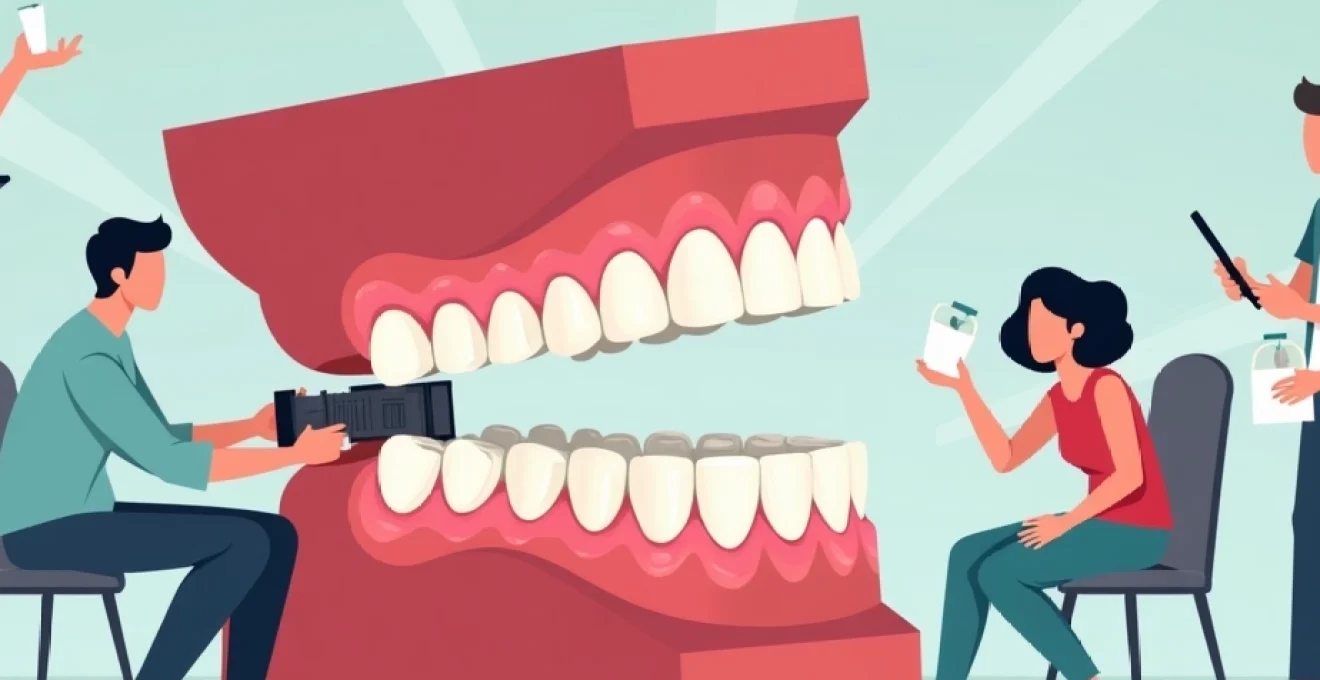
When your orthodontic expander suddenly dislodges from your mouth, the experience can be both alarming and disorienting. This common orthodontic emergency affects thousands of patients annually, particularly children and adolescents undergoing palatal expansion therapy. Understanding the immediate steps to take when faced with this situation can mean the difference between a minor setback and significant treatment delays. Dental expanders, including rapid palatal expanders, Haas appliances, and quad helix devices, are sophisticated orthodontic instruments designed to gradually widen the upper jaw and create space for proper tooth alignment. While these appliances are generally secure and reliable, various factors can contribute to their unexpected displacement, requiring prompt and appropriate action from both patients and caregivers.
Immediate emergency response protocols when your palatal expander dislodges
The moments immediately following an expander dislodgement are crucial for ensuring patient safety and preserving the integrity of the orthodontic appliance. Your first priority must be to assess whether the situation poses any immediate health risks, followed by taking specific steps to secure both the appliance and your oral environment until professional intervention becomes available.
Assess airway obstruction risk and swallowing safety
Before addressing the appliance itself, you must first ensure that no components have become lodged in your throat or pose a choking hazard. Breathing difficulties or persistent coughing following expander dislodgement warrant immediate medical attention. Remove any loose pieces from your mouth carefully, using your fingers or gently spitting them out. If you experience any sensation of something stuck in your throat, seek emergency medical care immediately rather than attempting to dislodge it yourself.
Check your mouth thoroughly for any remaining fragments or loose components that might have separated from the main appliance. Small screws, springs, or acrylic pieces can occasionally detach during the dislodgement process. Swallowing small orthodontic components typically poses minimal risk as they usually pass through the digestive system naturally, but documenting what has been lost will assist your orthodontist in planning repairs or replacements.
Retrieve and preserve the hawley retainer or quad helix components
Once you have confirmed your safety, carefully collect all visible pieces of the dislodged expander. Handle the appliance gently, avoiding excessive force that might cause additional damage to delicate components such as adjustment screws or wire frameworks. Place the appliance and any separated pieces in a clean, dry container or plastic bag to prevent loss or contamination.
Examine the retrieved appliance for obvious damage, such as bent wires, cracked acrylic, or separated bands. Take note of any missing components that you cannot locate, as this information will be valuable for your orthodontist’s assessment. Proper preservation of the appliance increases the likelihood that it can be repaired rather than completely replaced, potentially saving both time and cost in your treatment process.
Contact your orthodontist’s emergency line within 24 hours
Prompt communication with your orthodontic practice is essential for minimising treatment disruption and addressing any immediate concerns. Most orthodontic offices maintain emergency contact procedures specifically for situations like expander dislodgement. When calling, provide clear details about when the incident occurred, what you were doing at the time, and the current condition of both the appliance and your mouth.
Be prepared to describe any discomfort you are experiencing and whether you have located all pieces of the appliance. Your orthodontist may provide specific instructions for managing the situation until you can be seen, including dietary restrictions or temporary comfort measures. Scheduling an emergency appointment within 24-48 hours is typically recommended to prevent the expanded tissues from beginning to contract back to their original position.
Document appliance condition using digital photography
Taking clear photographs of the dislodged appliance and your mouth can provide valuable information to your orthodontist and may expedite the repair process. Use good lighting and capture multiple angles of the appliance, focusing particularly on any areas of obvious damage or wear. Include close-up images of the palatal area where the appliance was seated, as this can help identify any tissue changes or damage.
These visual records serve multiple purposes: they assist in treatment planning, provide documentation for insurance purposes, and help your orthodontist prepare necessary materials or replacement components before your appointment. Digital documentation has become increasingly valuable in modern orthodontic practice, enabling more efficient and accurate treatment adjustments.
Orthodontic appliance types and their specific dislodgement patterns
Different types of palatal expanders exhibit distinct failure modes and dislodgement patterns based on their design characteristics, attachment methods, and the forces they generate during active treatment. Understanding these patterns can help you better assess the severity of the situation and provide more accurate information to your orthodontic team.
Rapid palatal expander (RPE) failure mechanisms and band separation
Rapid palatal expanders typically fail at the band-cement interface, where the metal bands that encircle the posterior molars become debonded from the tooth surface. This type of failure often occurs gradually, with patients reporting increased mobility or looseness before complete dislodgement. The high forces generated during active expansion, combined with normal chewing stresses, can overwhelm the cement bond over time.
When RPE band separation occurs, you may notice that the appliance shifts or moves during eating or speaking. The expansion screw mechanism usually remains intact during band failures, making repair relatively straightforward if addressed promptly. Bilateral band failure results in complete appliance loss, while unilateral failure may leave the device partially attached and potentially irritating to soft tissues.
Haas expander central screw breakage and acrylic pad detachment
Haas expanders, which feature acrylic pads that contact the palatal tissues, can experience failure through screw mechanism breakage or separation of the acrylic components from the metal framework. Screw breakage often occurs due to over-activation, manufacturing defects, or excessive lateral forces during function. When the central screw fails, the appliance loses its expansion capability and may become loose or dislodged.
Acrylic pad detachment represents another common failure mode, particularly when the bonding between the acrylic and metal components deteriorates due to thermal cycling in the mouth or mechanical stress. Partial acrylic separation can create sharp edges that irritate the tongue and palatal tissues, requiring immediate attention to prevent soft tissue injury.
Hyrax expander wire framework distortion and solder joint failure
Hyrax expanders rely entirely on metal components and are particularly susceptible to wire framework distortion and solder joint failure. The four-armed wire design distributes expansion forces across multiple connection points, but this also creates multiple potential failure sites. Solder joints, where individual wire components are joined together, represent the weakest links in the appliance structure.
Framework distortion can occur when excessive forces are applied during expansion or when the appliance encounters unexpected stresses during eating or oral habits. Wire framework compromise often results in asymmetric expansion patterns and can lead to complete appliance failure if not addressed promptly. Unlike band failures, wire framework issues typically require complete appliance replacement rather than simple repair.
Quad helix spring activation loss and molar band debonding
Quad helix appliances combine spring activation with band retention, creating unique failure patterns that can involve loss of spring tension, band debonding, or both simultaneously. Spring activation loss occurs when the helical loops become deformed or when the connecting wires lose their designed curvature. This type of failure may not result in complete appliance loss but significantly reduces treatment effectiveness.
Molar band debonding in quad helix appliances often follows patterns similar to those seen with RPE devices, but the spring activation creates additional rotational forces that can accelerate cement failure. Combined spring and band failure typically necessitates complete appliance replacement, as the complex three-dimensional wire form is difficult to repair accurately in the clinical setting.
Professional orthodontic intervention requirements and timeframes
The urgency and complexity of professional intervention following expander dislodgement depend on multiple factors, including the type of appliance involved, the stage of treatment, and the duration since active expansion was completed. Understanding these variables helps establish realistic expectations for repair timelines and treatment adjustments.
Active expansion phases require the most urgent intervention, typically within 24-48 hours, as the newly expanded tissues begin contracting immediately upon appliance removal. During this critical period, tissue remodeling processes that have been initiated by the expansion forces can reverse rapidly, potentially negating weeks or months of treatment progress. Orthodontists often prioritise these emergency cases to minimise treatment setbacks.
Post-expansion retention phases allow for slightly more flexibility in scheduling, as the tissues have had time to stabilise and are less likely to undergo rapid dimensional changes. However, even during retention phases, extended periods without the appliance can lead to relapse and may necessitate additional expansion cycles to regain lost progress. Professional assessment within one week is generally recommended for retention-phase failures.
The complexity of required intervention varies significantly based on the failure mechanism and appliance condition. Simple band re-cementation can often be completed in a single appointment lasting 30-60 minutes, while complete appliance replacement may require multiple visits including impression-taking, laboratory fabrication time, and delivery appointments spanning 1-2 weeks.
Immediate professional intervention following expander dislodgement can prevent weeks of treatment delays and reduce the overall cost and complexity of orthodontic therapy.
Temporary stabilisation techniques using dental wax and OTC solutions
While awaiting professional orthodontic intervention, several temporary measures can help manage discomfort and prevent complications associated with expander dislodgement. These interim solutions focus on protecting soft tissues, maintaining oral hygiene, and preserving the expanded arch dimensions as much as possible through conservative means.
Orthodox dental wax represents the primary tool for managing sharp edges or protruding wires that may remain after partial appliance failure. Apply generous amounts of wax to any rough surfaces that contact the tongue, cheeks, or lips, ensuring complete coverage of potentially irritating areas. Wax application techniques should involve warming the material between clean fingers before pressing firmly over the problematic area, creating a smooth protective barrier.
Over-the-counter pain management options include non-steroidal anti-inflammatory drugs such as ibuprofen, which can address both pain and inflammation associated with tissue irritation or pressure changes following appliance loss. Acetaminophen provides additional pain relief without anti-inflammatory effects and can be used in combination with NSAIDs under appropriate dosing guidelines. Topical anaesthetic gels can provide temporary relief for localised soft tissue irritation.
Dietary modifications play a crucial role in preventing further complications and maintaining comfort during the interim period. Soft foods that require minimal chewing reduce stress on sensitive tissues and eliminate the risk of food impaction in areas previously occupied by the appliance. Avoiding temperature extremes helps prevent thermal sensitivity that may develop after appliance removal. Nutritional maintenance during this period requires creativity in food selection but remains essential for overall health and healing.
Oral hygiene practices must be adapted to address the changed oral environment while maintaining cleanliness and preventing infection. Gentle brushing techniques using soft-bristled toothbrushes help remove plaque and debris without irritating sensitive tissues. Antimicrobial mouth rinses can provide additional protection against bacterial overgrowth in areas that may be difficult to clean thoroughly. Warm salt water rinses offer natural antibacterial properties and can promote healing of any minor tissue irritation.
Preventing secondary complications during appliance displacement
The period following expander dislodgement presents several risks for secondary complications that can significantly impact treatment outcomes and patient comfort. Proactive management of these potential issues helps ensure optimal conditions for appliance replacement and continuation of orthodontic therapy.
Soft tissue trauma represents one of the most immediate concerns, particularly when appliance components remain partially attached or when sharp edges are present. Tongue laceration can occur when patients inadvertently contact rough surfaces during speaking or eating. Regular inspection of the oral cavity for signs of tissue damage, including cuts, abrasions, or unusual swelling, helps identify problems early when they are most manageable.
Bacterial overgrowth in areas previously occupied by the appliance can lead to localised infections or generalised oral health deterioration. The altered oral environment, combined with potential dietary changes and modified oral hygiene practices, creates conditions favourable to pathogenic bacterial growth. Plaque accumulation in hard-to-reach areas can progress rapidly to gingivitis or more serious periodontal problems if not addressed promptly.
Arch dimension changes begin immediately following appliance removal and can progress rapidly during the first few days. The viscoelastic properties of the periodontal ligament and surrounding tissues cause them to rebound toward their original positions once the expanding forces are removed. Relapse prevention during this critical period may involve modified oral habits, gentle manual pressure techniques, or temporary spacing devices as recommended by your orthodontist.
Speech and functional adaptations that developed during appliance wear may persist temporarily after removal, leading to communication difficulties or eating challenges. These functional issues typically resolve naturally as the oral muscles and neural pathways readjust to the changed oral environment. Functional rehabilitation exercises may be recommended to accelerate this adaptation process and restore normal oral function more quickly.
Early recognition and management of secondary complications following expander dislodgement can prevent more serious issues and facilitate smoother treatment continuation.
Insurance coverage protocols for emergency orthodontic appliance replacement
Understanding insurance coverage parameters for emergency orthodontic interventions helps patients and families prepare financially for unexpected appliance failures and replacement procedures. Coverage policies vary significantly between providers and plan types, making it essential to understand your specific benefits and limitations before emergencies arise.
Most orthodontic insurance plans include coverage for appliance repairs and replacements when they occur due to normal wear or accidental damage during routine use. However, coverage exclusions may apply for damage resulting from non-compliance with dietary restrictions, poor oral hygiene, or intentional manipulation of the appliance. Documentation requirements often include detailed clinical notes explaining the cause of failure and necessity for replacement.
Emergency service fees and after-hours charges may or may not be covered under standard orthodontic benefits, depending on the specific terms of your plan. Some insurers require pre-authorisation for emergency procedures, which can complicate immediate treatment needs. Financial responsibility for emergency services should be clarified with both your orthodontic office and insurance provider at the beginning of treatment to avoid unexpected costs.
Replacement appliance costs are typically subject to the same coverage limitations as initial appliance placement, with patients responsible for applicable deductibles, co-payments, or percentage-based cost-sharing. Multiple replacement events within a single treatment period may trigger additional scrutiny from insurance providers and could potentially affect coverage for subsequent replacements.
Documentation and claim submission procedures for emergency orthodontic services require careful attention to detail and timing requirements. Photographic evidence, detailed clinical records, and prompt submission of claims help ensure optimal reimbursement outcomes. Working closely with your orthodontic office’s insurance coordinator can streamline this process and maximise your available benefits while minimising out-of-pocket expenses for emergency interventions.