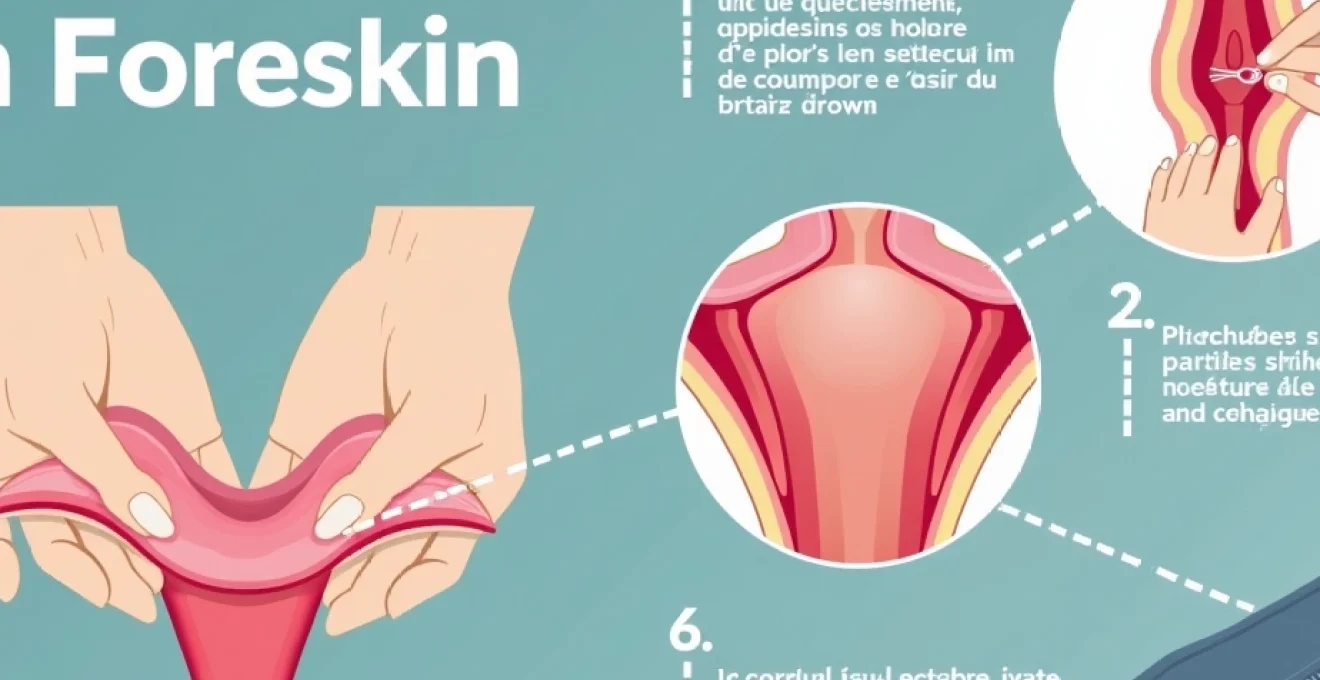
Understanding proper condom application for uncircumcised men remains a critical aspect of sexual health education that has historically been overlooked. Despite the fact that approximately 70% of men worldwide possess intact foreskin, most educational resources and instructions focus primarily on circumcised anatomy. This educational gap has resulted in increased rates of condom failure, reduced sexual satisfaction, and potential health risks for millions of sexually active individuals. Recent surveys indicate that nearly 79% of uncircumcised men experience difficulties with conventional condom application methods, highlighting the urgent need for specialised guidance and techniques tailored to intact penile anatomy.
Understanding foreskin anatomy and condom compatibility
Prepuce structure and retraction mechanics
The foreskin, medically termed the prepuce, consists of a double-layered fold of skin that covers the glans penis in its natural state. This anatomical structure contains specialised nerve endings and serves multiple protective and sensory functions. During sexual arousal, the foreskin typically retracts naturally, exposing the glans to varying degrees depending on individual anatomy. Understanding this natural retraction mechanism is essential for proper condom application, as it influences both the timing and technique required for optimal condom placement.
The prepuce contains both inner and outer layers, with the inner mucosa being particularly sensitive and requiring gentle handling during condom application. Individual variations in foreskin length, tightness, and retractability significantly impact the approach needed for successful condom use. Some men possess loose foreskin that retracts fully during erection, whilst others maintain partial or complete coverage even when fully aroused.
Phimosis and paraphimosis considerations for condom use
Phimosis, a condition where the foreskin cannot be retracted over the glans, affects approximately 1% of men over 16 years of age. This condition does not preclude condom use but requires modified application techniques. Men with phimosis can successfully use condoms by rolling them directly over the unretraced foreskin, ensuring proper coverage and protection without forcing retraction. The key consideration is selecting appropriately sized condoms that accommodate the additional bulk without compromising security.
Paraphimosis, the inability to return a retracted foreskin to its normal position, presents a more serious concern that requires immediate medical attention. During condom application, gentle handling and awareness of foreskin position prevent this potentially dangerous condition. If the foreskin becomes stuck in a retracted position during or after condom application, immediate medical intervention is necessary to prevent tissue damage and circulatory complications.
Smegma removal and Pre-Application hygiene protocols
Proper hygiene before condom application involves thorough cleansing of the glans and foreskin area to remove smegma and other natural secretions. Smegma, a combination of dead skin cells, oils, and moisture, can create slippery conditions that compromise condom adhesion and increase the risk of slippage. Gentle cleansing with warm water and mild soap effectively removes these secretions without causing irritation or disrupting the natural bacterial balance.
The cleaning process should focus on gently retracting the foreskin as far as comfortably possible and cleansing the exposed areas. Overly aggressive cleaning or the use of harsh soaps can cause irritation and sensitivity that interferes with comfortable condom use. After cleansing, thorough drying is essential to prevent moisture-related condom adherence issues and to create optimal conditions for application.
Frenulum sensitivity and protection during application
The frenulum, a small V-shaped tissue band connecting the foreskin to the underside of the glans, represents one of the most sensitive areas of the male anatomy. During condom application, particular care must be taken to avoid stretching or damaging this delicate tissue. The frenulum’s sensitivity means that proper condom fit and application technique can significantly impact sexual sensation and pleasure during use.
Protecting the frenulum during condom application involves gentle manipulation of the foreskin and selection of condoms with adequate space in the tip area. Condoms with enlarged reservoir tips or specially designed shapes provide additional room for natural frenulum movement during sexual activity. Understanding the location and sensitivity of this tissue helps prevent uncomfortable tension or potential tearing during condom use.
Pre-application assessment and preparation techniques
Foreskin retractability testing methods
Before attempting condom application, assessing individual foreskin retractability helps determine the most appropriate technique to employ. This assessment should be conducted when the penis is fully erect, as retractability can vary significantly between flaccid and aroused states. Gentle attempts at retraction reveal whether the foreskin moves freely, encounters resistance, or cannot be moved at all, informing the subsequent application strategy.
The assessment process involves slowly and gently pulling the foreskin back towards the base of the penis whilst monitoring for any discomfort or resistance. If retraction occurs easily and without discomfort, standard application techniques with foreskin manipulation can be employed. However, if retraction proves difficult or uncomfortable, alternative methods that work with the natural foreskin position are recommended.
Glans exposure and cleaning procedures
When foreskin retraction is possible, proper glans exposure allows for thorough cleaning and optimal condom placement. The exposed glans should be gently cleaned with a damp cloth or tissue to remove any residual moisture or secretions that could compromise condom adherence. This cleaning process also provides an opportunity to inspect the area for any signs of irritation or infection that might affect condom use.
During glans exposure, it’s important to maintain gentle pressure and avoid forcing the foreskin beyond its natural limits. The cleaning procedure should be swift but thorough, as prolonged exposure can cause the glans to become overly sensitive or uncomfortable. Proper exposure techniques ensure that the condom can be placed directly onto clean, dry skin for maximum effectiveness and comfort.
Moisture control and lubrication considerations
Managing moisture levels before condom application significantly impacts the success of the procedure. Excessive moisture from natural secretions, cleaning, or arousal can cause condoms to slip during application or use. Conversely, completely dry conditions can make condom application uncomfortable and increase the risk of tearing. Finding the optimal moisture balance requires careful preparation and potentially the strategic use of water-based lubricants.
A small drop of water-based lubricant placed inside the condom tip before application can enhance comfort and sensation whilst improving the application process for uncircumcised men.
The strategic application of lubricant both inside and outside the condom can address the unique challenges faced by uncircumcised men. Internal lubrication allows for natural foreskin movement during sexual activity, whilst external lubrication facilitates smooth application. However, excessive lubrication can cause slippage issues, making precise application crucial for optimal results.
Condom size selection for uncircumcised males
Proper condom sizing for uncircumcised men requires consideration of both the retracted and natural foreskin positions, as these can significantly affect the effective penis size and shape. Standard condom sizing guidelines may not account for the additional bulk and varying dimensions created by intact foreskin. Measurements should be taken in the position that will be used during sexual activity, whether with foreskin retracted or in its natural state.
Many uncircumcised men benefit from condoms with larger reservoir tips or specially designed shapes that accommodate natural foreskin movement. These designs prevent bunching and constriction that can reduce sensation and increase the risk of condom failure. Custom-fit condom options increasingly recognise the unique sizing needs of uncircumcised men, offering solutions that work with natural anatomy rather than against it.
Step-by-step condom application protocol for intact foreskin
Foreskin retraction positioning techniques
The initial positioning of the foreskin sets the foundation for successful condom application. For men who can comfortably retract their foreskin, gentle pulling back until the glans is fully exposed creates the optimal starting position. This retraction should be performed slowly and without force, allowing the tissue to adjust naturally. The foreskin should remain in this retracted position throughout the initial stages of condom application.
If complete retraction is not possible due to phimosis or discomfort, partial retraction that exposes at least the urethral opening provides sufficient access for condom placement. In cases where no retraction is possible, the condom application proceeds directly over the natural foreskin position, requiring modified techniques to ensure proper coverage and security.
Condom reservoir tip placement over exposed glans
With the glans properly exposed, the condom’s reservoir tip should be positioned directly over the tip of the penis, ensuring that any air bubbles are expelled by gently pinching the tip. This pinching action creates the necessary space for ejaculate collection whilst preventing air entrapment that could cause condom failure. The reservoir tip must make direct contact with the glans for optimal positioning.
Proper reservoir tip placement requires coordination between maintaining foreskin position and manipulating the condom. One hand maintains the foreskin in its retracted position whilst the other guides the condom tip into place. This technique ensures that the condom sits correctly on the exposed glans before the unrolling process begins, preventing misalignment or bunching during application.
Unrolling methods while maintaining foreskin position
The unrolling process represents the most critical phase of condom application for uncircumcised men. Using the free hand, the condom should be gradually unrolled down the shaft of the penis whilst maintaining the foreskin in its retracted position. This process requires steady, even pressure to prevent the condom from catching on the retracted foreskin or creating uncomfortable tension in the tissue.
During unrolling, periodic checks ensure that the foreskin remains properly positioned and that the condom is advancing smoothly without bunching or resistance. If the condom encounters difficulty during unrolling, stopping to readjust the foreskin position or adding a small amount of external lubrication can resolve most issues. The unrolling should continue until the condom reaches the base of the penis, providing complete coverage.
Base securing and foreskin coverage adjustment
Once the condom is fully unrolled to the base of the penis, the foreskin can be gently allowed to return to a more natural position over the condom. This adjustment should be performed carefully to avoid dislodging the condom or creating uncomfortable tension. The foreskin’s natural elasticity typically allows it to settle into a comfortable position that permits normal movement during sexual activity.
Securing the base of the condom involves ensuring that it sits snugly against the skin without being overly tight. The base should create an effective barrier without restricting blood circulation or causing discomfort. Proper base positioning prevents the condom from slipping during use whilst allowing for the natural expansion and contraction that occurs during sexual activity.
Final positioning verification and comfort assessment
The final verification process involves checking that the condom is properly positioned, secure, and comfortable before proceeding with sexual activity. This assessment includes verifying that the reservoir tip contains adequate space, the condom covers the entire penis shaft, and the foreskin can move naturally without binding or excessive tension. Any discomfort or irregular positioning should be addressed before use.
The final comfort assessment should include gentle movement of the foreskin to ensure that the condom accommodates natural motion without restriction or discomfort.
During this verification phase, attention should be paid to the sensation and comfort level, as properly applied condoms should not cause pain, excessive tightness, or restriction of natural movement. If any issues are identified during this assessment, the condom should be removed and reapplied using adjusted techniques or a different size to ensure optimal protection and comfort.
Common application errors and troubleshooting solutions
Incomplete foreskin retraction problems
Incomplete foreskin retraction during condom application can lead to bunching, poor fit, and increased risk of condom failure. This issue often occurs when men attempt to force retraction beyond their natural capacity or when nervousness affects normal foreskin mobility. The solution involves working with the natural retraction limits rather than forcing positioning that causes discomfort or resistance.
When complete retraction proves impossible, modified application techniques that accommodate partial retraction can still provide effective protection. These methods involve positioning the condom over the partially exposed glans and adjusting the unrolling technique to work with the available anatomy. Accepting natural limitations rather than forcing uncomfortable positions typically produces better results and increased comfort during use.
Condom slippage due to foreskin movement
Condom slippage represents one of the most common issues faced by uncircumcised men, often resulting from the natural movement of the foreskin during sexual activity. This problem can be addressed through proper sizing, strategic lubrication, and application techniques that work with rather than against natural foreskin mobility. Understanding the mechanics of foreskin movement helps prevent slippage whilst maintaining comfort and sensation.
Solutions for slippage issues include selecting condoms with enhanced adherence properties, using appropriate amounts of lubrication both inside and outside the condom, and ensuring proper initial fit. Some men benefit from condoms designed specifically for uncircumcised anatomy, which feature modified shapes and materials that accommodate foreskin movement whilst maintaining security.
Air bubble formation between foreskin and condom
Air bubbles trapped between the foreskin and condom can create weak points that increase the risk of tearing or failure. These bubbles often form when the condom is applied too quickly or when the foreskin is not properly positioned during application. Prevention involves slow, deliberate application with periodic smoothing to eliminate trapped air.
When air bubbles are detected during or after application, gentle massage of the affected area can help redistribute the air and eliminate weak spots. However, if significant air entrapment occurs, removing and reapplying the condom may be necessary to ensure reliable protection. Careful application techniques that prioritise air elimination over speed typically prevent this issue from occurring.
Premature foreskin return during application
The premature return of retracted foreskin during condom application can complicate the process and result in improper positioning. This issue often occurs due to inadequate grip on the foreskin or natural elasticity that pulls the tissue back to its resting position. Solutions involve maintaining consistent gentle pressure on the foreskin throughout the application process and using techniques that work efficiently within the available time window.
If the foreskin returns prematurely during application, stopping the process to reposition the tissue typically produces better results than attempting to continue with improper positioning. This approach may require multiple attempts initially but becomes more efficient with practice and familiarity with individual anatomical responses.
Post-application safety checks and maintenance
Following successful condom application, conducting comprehensive safety checks ensures optimal protection and identifies any potential issues before sexual activity begins. These checks involve visual inspection of the condom position, assessment of foreskin comfort and mobility, and verification that all components are functioning as intended. Regular post-application assessment prevents many common problems that could compromise protection or comfort during use.
The safety check protocol includes verifying that the condom is properly positioned without bunching or air bubbles, confirming that the foreskin can move naturally without binding, and ensuring that the base of the condom is secure without being overly restrictive. Any irregularities discovered during this assessment should be addressed immediately through repositioning or reapplication as necessary.
During sexual activity, periodic awareness of condom position and foreskin comfort helps maintain optimal conditions throughout the encounter. If issues arise during use, stopping to assess and correct problems prevents more serious complications and ensures continued protection. Maintaining awareness of comfort and positioning throughout sexual activity represents an important aspect of responsible condom use for uncircumcised men.
Post-activity removal requires similar care to application, with gentle techniques that respect the sensitivity of the foreskin and glans. The condom should be removed whilst the penis is still erect, holding the base to prevent spillage, and the foreskin should be allowed to return to its natural position gradually. Proper removal techniques prevent discomfort and reduce the risk of tissue irritation or injury.
Medical considerations and professional consultation guidelines
Certain medical conditions affecting the foreskin or penis may require specialised approaches to condom use or professional medical guidance. Conditions such as severe phimosis, recurrent infections, or inflammatory conditions can impact both the ability to use condoms effectively and the techniques required for safe application. Men experiencing persistent difficulties with condom use should consider consultation with healthcare
providers who specialise in men’s sexual health or urology. Early intervention can prevent complications and ensure that sexual health needs are met effectively whilst maintaining safety and comfort.
Phimosis that interferes significantly with condom application or sexual function may benefit from medical treatment options including topical steroid creams, gradual stretching exercises, or surgical interventions such as preputioplasty or circumcision. These treatments should be discussed thoroughly with qualified medical professionals who can assess individual circumstances and recommend appropriate interventions based on severity and personal preferences.
Paraphimosis represents a medical emergency that requires immediate professional attention to prevent permanent tissue damage or circulatory compromise. Men who experience difficulty returning their foreskin to its natural position after condom use should seek urgent medical care. Recognising the signs of paraphimosis, including severe pain, swelling, and discolouration of the glans, enables prompt treatment and prevents serious complications.
Recurrent infections or inflammatory conditions affecting the foreskin may require modifications to condom selection and application techniques. Conditions such as balanitis, posthitis, or candidiasis can create sensitivity and tissue changes that impact condom tolerance and effectiveness. Working with healthcare providers to manage these conditions ensures that sexual health practices remain safe and comfortable whilst addressing underlying medical issues.
Men experiencing persistent discomfort, recurring condom failures, or concerns about their foreskin health should not hesitate to seek professional guidance. Healthcare providers can offer personalised advice on condom selection, application techniques, and potential medical interventions that address individual anatomical and health considerations. Regular sexual health check-ups also provide opportunities to discuss condom use effectiveness and address any concerns in a confidential, professional environment.
Professional consultation becomes essential when standard condom application techniques consistently fail or when underlying medical conditions interfere with safe and comfortable condom use.
Healthcare providers specialising in sexual health can recommend specific products, techniques, or treatments tailored to individual needs and circumstances. They can also provide education about proper hygiene, infection prevention, and sexual health maintenance that complements effective condom use. This professional support ensures that uncircumcised men can maintain active, healthy sexual lives whilst prioritising safety and protection for themselves and their partners.
The integration of professional medical guidance with proper condom application techniques creates a comprehensive approach to sexual health that addresses both immediate practical needs and long-term health considerations. By understanding when to seek professional help and maintaining open communication with healthcare providers, uncircumcised men can navigate any challenges related to condom use whilst ensuring optimal sexual health outcomes.