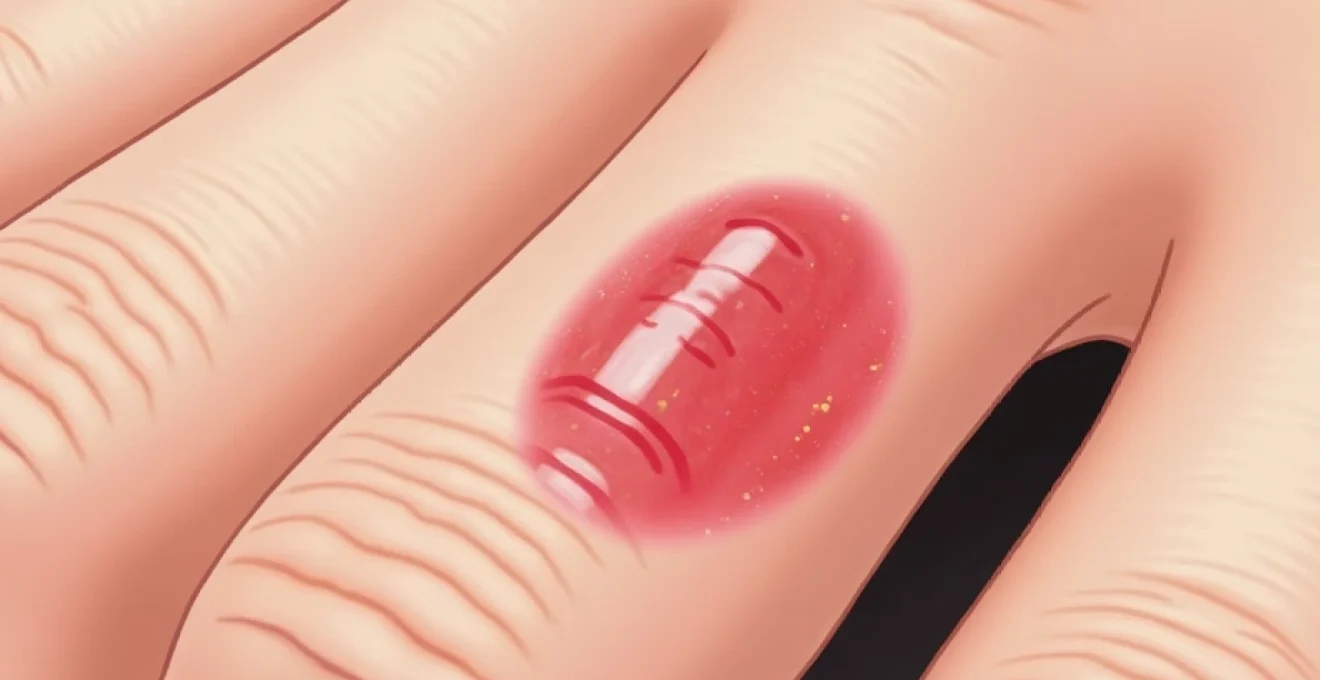
Herpes simplex virus (HSV) infections present in remarkably diverse ways, often challenging both patients and healthcare providers to distinguish between viral lesions and other skin conditions. The characteristic fluid-filled blisters that most people associate with herpes represent just one manifestation of this complex virus. In reality, HSV can produce lesions that appear deceptively similar to paper cuts, razor nicks, or other forms of mechanical trauma, leading to frequent misdiagnosis and delayed treatment.
The morphological diversity of herpes lesions stems from various factors including the patient’s immune status, the anatomical location of the outbreak, viral load, and whether the episode represents a primary infection or recurrent manifestation. Understanding these atypical presentations becomes crucial for accurate diagnosis and appropriate patient care, particularly when lesions deviate from the classical vesicular appearance that healthcare professionals typically expect.
Understanding HSV-1 and HSV-2 lesion morphology variations
The morphological spectrum of herpes simplex lesions extends far beyond the commonly recognised clustered vesicles on an erythematous base. Both HSV-1 and HSV-2 can produce linear, fissure-like lesions that closely resemble paper cuts or superficial lacerations. These atypical presentations occur when viral replication disrupts the normal architecture of the epidermis and dermis, creating narrow, linear breaks in the skin surface rather than the typical rounded vesicular formations.
Research indicates that approximately 30% of herpes presentations deviate from classical morphology , with linear lesions representing a significant subset of these atypical manifestations. The viral cytopathic effects can cause localised tissue necrosis and inflammation that results in elongated, crack-like lesions particularly evident in areas subject to mechanical stress or natural skin folds.
Primary herpes simplex virus outbreak characteristics
Initial HSV infections frequently produce more extensive and morphologically diverse lesions compared to recurrent episodes. Primary outbreaks may manifest as multiple linear fissures radiating from a central point of viral entry, creating a pattern that resembles multiple paper cuts arranged in close proximity. The accompanying inflammatory response during first episodes can cause significant tissue swelling and distortion, further obscuring the typical vesicular appearance.
Patients experiencing primary genital herpes may develop linear lesions along the vulvar vestibule, penile raphe, or perianal folds where anatomical structures naturally create lines of tension. These primary presentations often persist for 10-14 days, significantly longer than the typical paper cut healing timeline, providing one distinguishing feature for differential diagnosis.
Recurrent herpes episodes: size and appearance patterns
Recurrent herpes episodes typically produce smaller, more localised lesions that may appear as single linear fissures rather than clusters of vesicles. The reduced viral load and established immune response during recurrent episodes limit the extent of tissue involvement, resulting in narrow, shallow lesions that closely mimic minor traumatic injuries. These recurrent linear lesions often measure 2-5 millimetres in length and may be so subtle that patients dismiss them as insignificant skin irritation.
The predictable anatomical distribution of recurrent lesions provides valuable diagnostic information. Recurrent linear herpes lesions typically appear in the same general area as previous outbreaks , following established neural pathways from dormant ganglia to specific dermatomes. This consistency in location differs markedly from random paper cuts that occur based on external trauma patterns.
Atypical herpes presentations in immunocompromised patients
Immunocompromised individuals may develop particularly unusual herpes manifestations, including chronic linear ulcerations that persist for weeks or months. These patients may present with extensive fissure-like lesions that resist healing and demonstrate atypical morphology due to impaired immune surveillance and viral clearance mechanisms. The chronic nature of these lesions provides a key distinguishing feature from acute traumatic injuries.
HIV-positive patients, organ transplant recipients, and those receiving immunosuppressive medications represent populations at highest risk for developing these atypical linear herpes presentations. The diagnostic challenge increases in these patients because their compromised immune systems may not mount the typical inflammatory response associated with herpes outbreaks.
Linear herpes lesions: koebner phenomenon examples
The Koebner phenomenon describes the development of skin lesions along lines of trauma or mechanical stress, and herpes simplex virus can demonstrate this pattern in susceptible individuals. Linear herpes lesions may develop along scratch marks, clothing friction lines, or areas of repetitive minor trauma, creating an appearance that strongly suggests mechanical causation rather than viral aetiology.
This phenomenon occurs when subclinical viral reactivation coincides with minor skin trauma, causing HSV lesions to manifest preferentially along the traumatised tissue. The resulting linear pattern can be particularly confusing because the lesion morphology directly corresponds to the apparent traumatic cause, masking the underlying viral pathogenesis.
Clinical differential diagnosis: paper cut trauma versus viral lesions
Distinguishing between genuine paper cuts and herpes lesions requires careful attention to multiple clinical parameters beyond simple visual appearance. The temporal evolution of lesions provides critical diagnostic information, as paper cuts typically demonstrate linear healing progression with scab formation and resolution within 3-7 days. In contrast, linear herpes lesions often show initial progression with increased depth and surrounding erythema before beginning their healing phase.
The anatomical distribution patterns offer another crucial differentiating factor. Paper cuts occur in locations corresponding to hand activities and paper handling , typically affecting fingertips, finger pads, and the web spaces between digits. Herpes lesions, however, follow established neural pathways and tend to recur in consistent anatomical locations regardless of recent trauma patterns.
Clinical experience demonstrates that patients often provide compelling histories of paper handling or minor trauma that seem to explain linear lesions, but careful questioning reveals recurring episodes in similar locations that suggest viral rather than traumatic aetiology.
Microscopic herpes fissures on fingers and lips
Herpetic lesions affecting the fingers and perioral region can present as microscopic fissures that closely resemble minor traumatic injuries. These subtle manifestations may appear as hairline cracks in the skin surface, particularly evident at the vermillion border of the lips or around the nail folds where skin tension naturally creates susceptible areas for linear lesion development.
The differential diagnosis becomes particularly challenging when patients report activities that could plausibly cause such minor injuries. However, the presence of associated symptoms such as tingling, burning, or localised tenderness preceding lesion development suggests herpetic rather than traumatic causation. Additionally, the bilateral occurrence of apparently similar “paper cuts” should raise suspicion for viral aetiology.
Herpetic whitlow presentation in healthcare workers
Healthcare workers represent a particularly vulnerable population for developing herpetic whitlow, which may present as linear fissures around the nail fold that closely resemble paper cuts or other minor occupational injuries. The high-stress environment of healthcare settings, combined with frequent hand washing and glove use, can predispose to both viral reactivation and minor traumatic injuries, creating diagnostic confusion.
The occupational exposure to paper records, packaging materials, and various medical supplies provides a plausible explanation for apparent paper cuts, potentially delaying recognition of viral aetiology. However, the intense pain associated with herpetic whitlow typically exceeds that expected from simple traumatic injuries of similar size and appearance.
Perioral herpes simplex: linear crack appearance
Perioral herpes lesions may present as linear cracks at the corners of the mouth (angular cheilitis pattern) or along the vermillion border, creating an appearance that patients often attribute to dry weather, excessive lip licking, or paper cuts from envelope handling. These linear lesions can be particularly subtle during early stages, appearing as simple skin fissures without obvious vesicular components.
The seasonal pattern of perioral herpes reactivation often correlates with environmental factors that also predispose to chapped lips and minor traumatic injuries, further complicating the diagnostic process. However, the associated prodromal symptoms and the typical healing pattern with crust formation help differentiate viral lesions from simple environmental trauma.
Genital herpes fissures: vulvar and penile manifestations
Genital herpes can manifest as linear fissures along natural anatomical lines, particularly affecting the posterior fourchette, vulvar vestibule, or penile raphe. These lesions may appear as simple tears or cuts that patients attribute to sexual activity, aggressive hygiene practices, or tight clothing. The linear morphology along anatomical stress points can be particularly misleading because these areas are indeed susceptible to mechanical trauma.
The key distinguishing features include the presence of prodromal symptoms, the typical 7-10 day healing course with crust formation, and the tendency for lesions to recur in similar locations. Additionally, the pain associated with genital herpes fissures often exceeds that expected from simple mechanical trauma , and patients may report burning or stinging sensations rather than the sharp, immediate pain characteristic of fresh cuts.
Dermatoscopic features distinguishing HSV from mechanical trauma
Dermatoscopic examination provides valuable morphological details that can help distinguish herpes simplex lesions from traumatic injuries, even when both present as linear skin defects. HSV lesions typically demonstrate irregular margins with a scalloped or serrated appearance under magnification, reflecting the viral cytopathic effects on keratinocytes. In contrast, true paper cuts show clean, linear margins corresponding to the sharp trauma that created them.
The base of herpetic lesions often appears granular or cobblestone-like under dermatoscopic examination, with evidence of viral cytopathic changes including multinucleated giant cells and ballooning degeneration. The surrounding tissue may show subtle inflammatory changes including dilated capillaries and oedema that extend beyond the immediate lesion borders. These features contrast with the clean, traumatic appearance of genuine paper cuts, which typically show sharp margins and minimal surrounding inflammation unless secondary bacterial infection has occurred.
Vascular patterns provide additional diagnostic information through dermatoscopic assessment. HSV lesions often demonstrate irregular vascular proliferation and inflammation extending into the surrounding tissue, creating a halo effect around the primary lesion. The temporal evolution visible through serial dermatoscopic examination shows the characteristic progression from initial tissue swelling through vesiculation to crusting and healing, a pattern distinct from the linear healing progression of traumatic injuries.
Laboratory confirmation methods for ambiguous herpes lesions
When clinical assessment cannot definitively distinguish between herpes simplex lesions and traumatic injuries, laboratory confirmation becomes essential for accurate diagnosis and appropriate patient management. The choice of diagnostic method depends on the lesion characteristics, timing of presentation, and available laboratory resources. Modern molecular techniques have significantly improved the sensitivity and specificity of herpes diagnosis, particularly for atypical presentations that might previously have gone unrecognised.
Laboratory confirmation should be pursued whenever there is reasonable suspicion of herpes simplex virus, regardless of atypical morphology, because accurate diagnosis has significant implications for patient counselling, treatment decisions, and transmission prevention.
PCR testing sensitivity for minimal HSV specimens
Polymerase chain reaction (PCR) testing represents the gold standard for herpes simplex virus detection, offering exceptional sensitivity even for minimal specimen volumes obtained from small, linear lesions. The technique can detect viral DNA from lesions that appear too small or atypical for traditional culture methods, making it particularly valuable for paper cut-like presentations where specimen collection may be limited.
PCR sensitivity remains high even during later stages of lesion evolution when viral shedding may be decreased. This temporal flexibility allows for accurate diagnosis even when patients present several days after lesion onset, a common scenario when initial presentations are attributed to minor trauma rather than viral infection. The ability to detect both HSV-1 and HSV-2 through type-specific PCR provides additional diagnostic value for patient counselling and management planning.
Tzanck smear limitations in linear lesion assessment
Traditional Tzanck smear examination shows significant limitations when applied to linear, fissure-like herpes lesions that may be mistaken for paper cuts. The technique requires adequate cellular material for microscopic examination, and narrow, linear lesions may not provide sufficient specimen quantity for reliable interpretation. Additionally, the absence of obvious vesicular fluid in these atypical presentations reduces the likelihood of identifying characteristic multinucleated giant cells.
The sensitivity of Tzanck smears decreases significantly once lesions begin to crust or heal, limiting the diagnostic window for this technique. False negative results are particularly common in linear herpes lesions because the morphology suggests sampling from the lesion base rather than vesicular contents , where the highest concentration of infected cells would typically be found.
HSV culture requirements for paper Cut-Like presentations
Viral culture for HSV requires viable virus particles, making specimen collection technique particularly critical for paper cut-like presentations where vesicular fluid may not be apparent. The narrow, linear morphology of these lesions necessitates careful sampling from the lesion base using appropriate collection media and transport conditions. Culture sensitivity decreases rapidly once lesions begin to dry or form crusts, emphasising the importance of early specimen collection.
The time-to-positivity for HSV culture typically ranges from 1-5 days, with faster results generally correlating with higher viral loads. Linear lesions may produce slower culture results due to lower viral concentrations compared to classical vesicular presentations. However, successful isolation provides the additional benefit of antiviral sensitivity testing, which can guide treatment decisions in complicated cases or immunocompromised patients.
Treatment protocols for atypical herpes simplex manifestations
Treatment approaches for herpes simplex lesions resembling paper cuts follow similar principles to classical presentations, with some modifications to account for the atypical morphology and potential diagnostic uncertainty. Early initiation of antiviral therapy remains paramount, as treatment effectiveness decreases significantly when started more than 72 hours after lesion onset. The challenge lies in recognising these atypical presentations early enough to provide maximum therapeutic benefit.
Standard antiviral medications including aciclovir, valaciclovir, and famciclovir demonstrate equivalent efficacy for linear herpes lesions compared to typical vesicular presentations. However, the subtle nature of paper cut-like lesions may result in delayed recognition and treatment initiation, potentially reducing therapeutic effectiveness. Prophylactic antiviral therapy should be considered for patients with frequent atypical recurrences , particularly when the linear lesions cause significant discomfort or functional impairment.
Topical antiviral preparations may provide additional benefit for superficial, linear lesions, particularly when combined with systemic therapy. The narrow morphology of these lesions allows for focused topical application that may enhance local drug concentrations while minimising systemic exposure. Pain management becomes particularly important for linear genital lesions, where the anatomical location may cause significant discomfort during urination or normal activities.
Patient education: recognising subtle HSV recurrence patterns
Effective patient education about atypical herpes presentations requires addressing the common misconception that all herpes lesions appear as obvious, painful blisters. Many patients dismiss subtle linear lesions as minor injuries, leading to delayed recognition of recurrent episodes and potential inadvertent transmission to partners. Educational programmes should emphasise the diverse morphological spectrum of herpes manifestations, including the paper cut-like appearance that can occur in various anatomical locations.
Patients should be taught to recognise prodromal symptoms that may precede atypical lesions, including localised tingling, burning, or tenderness that occurs 24-48 hours before visible lesion development. The predictable anatomical distribution of recurrent episodes provides another educational opportunity, as patients can learn to identify their personal pattern of lesion locations and morphology. This knowledge enables earlier recognition and treatment initiation for subsequent episodes.
Documentation strategies can significantly improve patient awareness of their individual herpes patterns. Encouraging patients to photograph lesions and maintain a symptom diary helps identify subtle recurrences that might otherwise be dismissed as minor injuries. The temporal correlation between stress, illness, or other triggers and the development of linear lesions becomes apparent through careful documentation, enabling patients to implement stress reduction strategies and seek earlier treatment when appropriate.
Partner communication represents a critical component of patient education, particularly regarding the transmission risk associated with subtle, paper cut-like lesions. Many patients assume that minor-appearing lesions pose minimal transmission risk, but viral shedding can occur even from small, linear lesions. Education should emphasise the importance of avoiding intimate contact during any suspected herpes episode, regardless of lesion morphology, and the value of suppressive antiviral therapy for reducing transmission risk in discordant couples.